

At our recent CEO Roundtable, a group of prominent Melbourne based CEOs came together to examine how fast shifting consumer sentiment is reshaping strategy, capital allocation and leadership decision making. While grounded in the realities of the Australian market, the discussion reflected the global experience of many in the room, highlighting patterns emerging across international markets as well as local ones. Uneven demand, shorter planning cycles and the rising premium on leadership capability were consistent themes.
A message that anchored the conversation
As one participant observed, “Strategy holds its line, but tactics must move at the speed of sentiment.” This balance between long term direction and short-term responsiveness became a defining theme across the session.
Volatility is now a structural feature of demand
Consumer sentiment rose sharply in November, before retreating again in early December. Although this played out locally, leaders with international backgrounds noted similar whiplash across Asia, Europe and North America. Sentiment cycles are shortening, becoming more reactive and influenced by emotion as much as economics.
State based divergence in Australia illustrated the point. Queensland and Western Australia continue to perform ahead of expectations, while Victoria and New South Wales remain softer due to delayed building activity, insurance delays and more cautious discretionary spend. Comparable regional fragmentation is being mirrored in many global markets.
The learning: demand is no longer uniform, even within single geographies. Strategies need national coherence but local adaptability.
Capital is moving where the signals are strongest
CEOs described a clear shift toward disciplined, evidence led investment. Capital is being directed to markets and categories showing structural momentum, rather than relying on historic patterns or assumptions. Leaders with international experience noted this as a global trend: selectivity and timing are becoming competitive advantages.
Decision clarity is becoming a differentiator
Perfect information is rare in this environment. What matters is alignment. Organisations with clear communication rhythms are making cleaner, faster decisions and avoiding the noise that slows execution.
Boards were part of this discussion. Several CEOs highlighted the need to bring directors closer to the cadence of operational reality, enabling more timely and better informed decision making — a governance challenge seen both in Australia and abroad.
Leadership capability is now a strategic lever
Despite pressure on margins, CEOs remain focused on building capability. The most significant gaps are behavioural: adaptability, commercial judgement and clear communication are becoming essential to navigate conditions that differ across markets and shift quickly.
Succession depth is returning to the strategic agenda, particularly in consumer driven sectors where capability, rather than ideas or capital, often becomes the true constraint.
What this means heading into 2026
Four imperatives stood out:
- Plan for sentiment cycles to remain volatile and, at times, irrational
- Treat regional divergence as a structural trend, not a temporary anomaly
- Simplify decision pathways and communication rhythms to reduce organisational noise
- Strengthen leadership capability and succession depth ahead of the next growth cycle
Looking ahead
TRANSEARCH International Australia is proud to support this dialogue through our Quarterly CEO Roundtable Series. For organisations exposed to fast moving consumer sentiment and uneven demand, these peer forums provide a valuable space to compare signals, refine assumptions and sharpen focus.
Executive Search remains central to our work. For consumer driven sectors in particular, our Orxestra® methodology helps ensure alignment across culture, leadership style and performance expectations, reducing risk in critical C suite and board appointments.
Our Leadership Consulting services complement this. Market intelligence, talent mapping, succession planning, leadership assessment and culture diagnostics are helping organisations maintain clarity, build capability and respond to volatility with confidence.
Many clients are also using Why Do You Stay? to understand the factors that retain their strongest talent. In markets where both customer and employee sentiment can shift quickly, these insights are proving essential in protecting capability and sustaining performance. If you would like to join a future CEO Roundtable, including our February session focused on Outlook 2026, or explore how we can support your leadership and talent agenda, I would welcome a conversation.
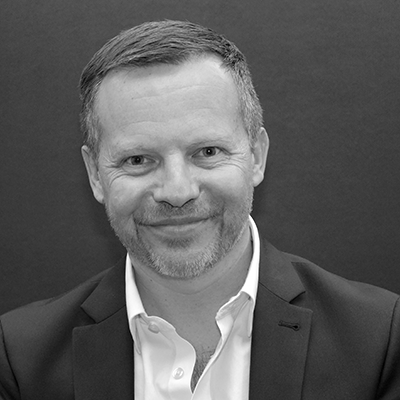
Cameron is a well-established and highly reputable executive search professional, with over 30 years’ continuous experience in the executive search and recruitment industry. He specialises in the appointment of CEOs, C suite Executives, General Managers and senior professionals across the Consumer / FMCG, Industrial, Industrial, Transport Energy / Power Industry Sectors. In 2022, Cameron obtained two Advanced Certificates – ‘Leaders & Culture’ and ‘Executive Talent’, through Cornell University Industrial Labour Relations (ILR) School and the Association of Executive Search Consultants. Cameron has an engaging and authentic approach, with a sharp intellect and high attention to detail, with the ability to confidently identify, assess, engage and bring the right talent in the market into search processes, through to appointment and beyond. Read more…