
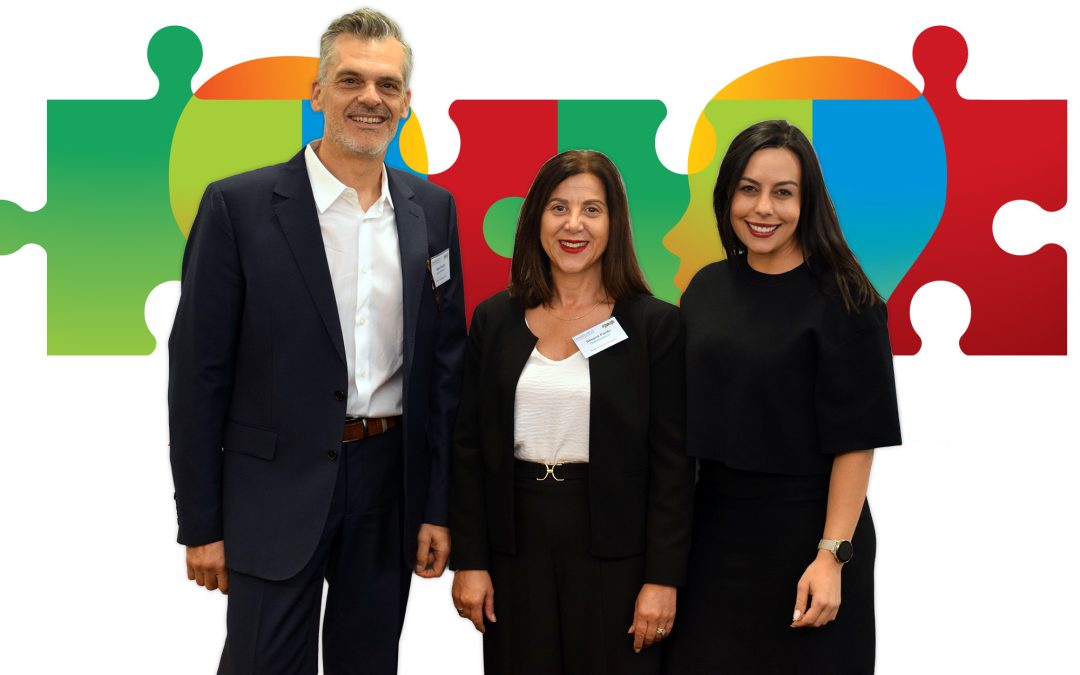
Insights from a CPO Roundtable hosted by Silvana Pardo, Director, TRANSEARCH Australia
In a rapidly evolving regulatory and workforce landscape, organisations are confronting a defining leadership question: How do we sustain high performance while strengthening psychosocial safety and maintaining good governance discipline?
To explore this challenge, Silvana Pardo, a Director of TRANSEARCH International Australia, convened and hosted a senior forum of Chief People Officers, joined by guest presenters joined by guest presenters Sam Pupillo, Head of Workplace Relations, People & Corporate Affairs at Asahi Beverages, and Chanel Nesci, General Manager – Culture, Wellbeing and Safety at Bupa. Held under Chatham House Rules, the forum enabled an open exchange of experience across healthcare, manufacturing, retail, professional services and government-linked environments.
A central theme that emerged was the evolution of psychosocial safety from a wellbeing initiative to an enterprise risk priority. For many organisations, their journey began through a focus on mental health awareness and injury management. However, regulatory reform and the pandemic accelerated a decisive shift in framing: psychological health is now widely recognised as a governance issue, a workforce sustainability issue, a financial exposure consideration and a board-level risk.
In more mature organisations, psychosocial safety is structurally integrated across safety governance, workers’ compensation, workplace relations, culture strategy and enterprise risk reporting, sitting directly with People & Culture. While governance frameworks continue to strengthen, frontline leadership capability remains the decisive variable. Leaders are expected to deliver commercial outcomes while addressing underperformance, supporting employees experiencing distress, navigating restructures and role redesign, and managing compliance and regulatory exposure simultaneously.
Two counterproductive patterns were widely recognised during the discussion: avoidance (where leaders hesitate to address performance concerns for fear of escalation) and overreaction (where matters are escalated too quickly, intensifying conflict and potential harm).
Organisations demonstrating maturity are therefore shifting from compliance-led training to capability development. Some have even begun incorporating simulated ‘Council’ sessions reviewing de-identified cases, testing cross-functional triage between HR, safety and legal teams, and embedding bite-sized learning programs with clear pathways for escalation if additional support is required. This is further strengthened through structured exposure to complex cases and supported decision-making.
Psychosocial harm often develops not from single critical incidents, but through prolonged ambiguity, unmanaged workload or unresolved tension. Several leaders described deliberately reframing “performance management” as “high performance,” moving the focus from remediation to understanding and prevention. This approach encourages leaders to co-design clear roles and role expectations, establish feedback channels, address concerns early and proportionately, and spend more time in “perform and grow” conversations. Preventative performance discipline therefore, strengthens both wellbeing and commercial outcomes.
The forum also examined structural drivers of psychosocial risk. Organisational change, repeated restructures, cost pressures and accelerating AI adoption are continuously reshaping roles. For some people this has simply led to accumulated responsibilities with diminished clarity of their role.
More advanced organisations are embedding psychosocial risk assessment into structural change processes, combining qualitative and quantitative inputs to identify hazards, such as excessive workload, diminished role clarity, insufficient support and persistent interpersonal conflict. In several examples shared, robust assessment provided enough evidence to modify or pause business decisions where risk was deemed intolerable, demonstrating disciplined risk governance practices, rather than reactive intervention.
Board engagement varies. Some boards continue to treat psychosocial safety as peripheral, while others have embedded it into their enterprise risk management systems and due diligence training. Although return on investment remains a frequent question, much of the value lies in avoided risk: volatility, claims not incurred, attrition stabilised and reputational damage prevented. Increasingly, psychosocial safety is becoming recognised as both ethically sound and commercially sensible.
An emerging dimension is the growing use of AI tools in people leadership processes. While AI can assist with preparation and documentation, it cannot replace the contextual judgement or emotional intelligence required in face-to-face or complex discussions, and regulatory scrutiny in this area is likely to increase. Leadership discernment on the responsible use of AI remains essential.
Psychosocial safety is not a peripheral “nice to have” or a regulatory overlay. It’s a core leadership imperative. As host and convenor Silvana Pardo observed, the conversation is quickly shifting from compliance to capability. With early intervention, good governance, sustained investment in education and training, and the courage to prioritise these initiatives, organisations who successfully embed psychosocial safety into their leadership capability will be better positioned to sustain performance in a business environment increasingly defined by scrutiny and complexity.

Silvana Pardo is a Director of TRANSEARCH International Australia, one of Australia’s most progressive executive search firms and one of the leading executive search organisations in the world. With over 25 years of experience and an extensive business network of Human Resource professionals, Silvana enjoys an outstanding reputation as one of Australia’s leading Search Practitioners. Read more…